
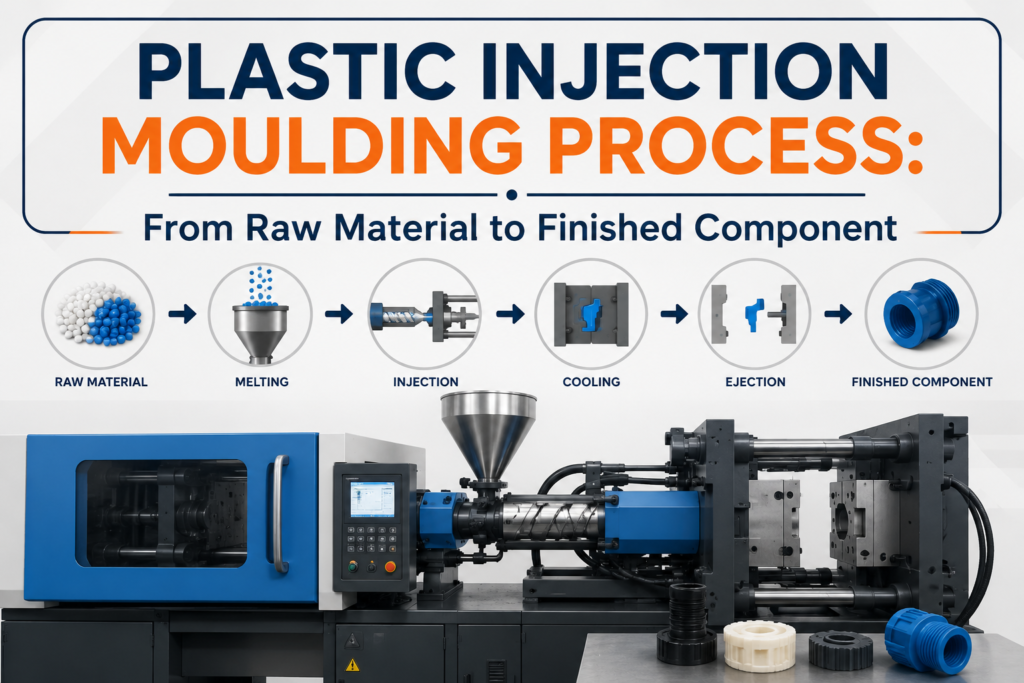
For an OEM buyer, understanding the injection moulding process is important long before a purchase order reaches production. The injection moulding process converts selected plastic raw material into a finished component through carefully controlled stages including material preparation, melting, injection, mould filling, cooling, ejection and inspection. Although a finished plastic part may appear simple, its quality depends on how effectively each stage of the injection moulding process is controlled. Material selection, component design, mould construction, machine parameters, cooling conditions and quality checks can all influence dimensional accuracy, appearance, fit, mechanical performance and production consistency.
Plastic injection moulding is widely used for producing repeatable components for OEM, industrial and commercial applications. For procurement managers, engineers and sourcing teams, understanding the injection moulding process makes it easier to evaluate how a manufacturer converts an engineering drawing or component specification into a controlled production method. Buyers can assess not only the finished sample but also important manufacturing considerations such as tooling, material behaviour, process stability, inspection and repeatability.
This becomes particularly important when sourcing custom plastic components that must maintain specified dimensions, material properties, assembly requirements and quality expectations across repeat orders. A well-controlled injection moulding process can support greater consistency from raw-material preparation through moulding and final inspection. Understanding these manufacturing stages also allows OEM buyers to have more productive technical discussions with a plastic injection moulding manufacturer before tooling, sampling and production begin.
How the Injection Moulding Process Works
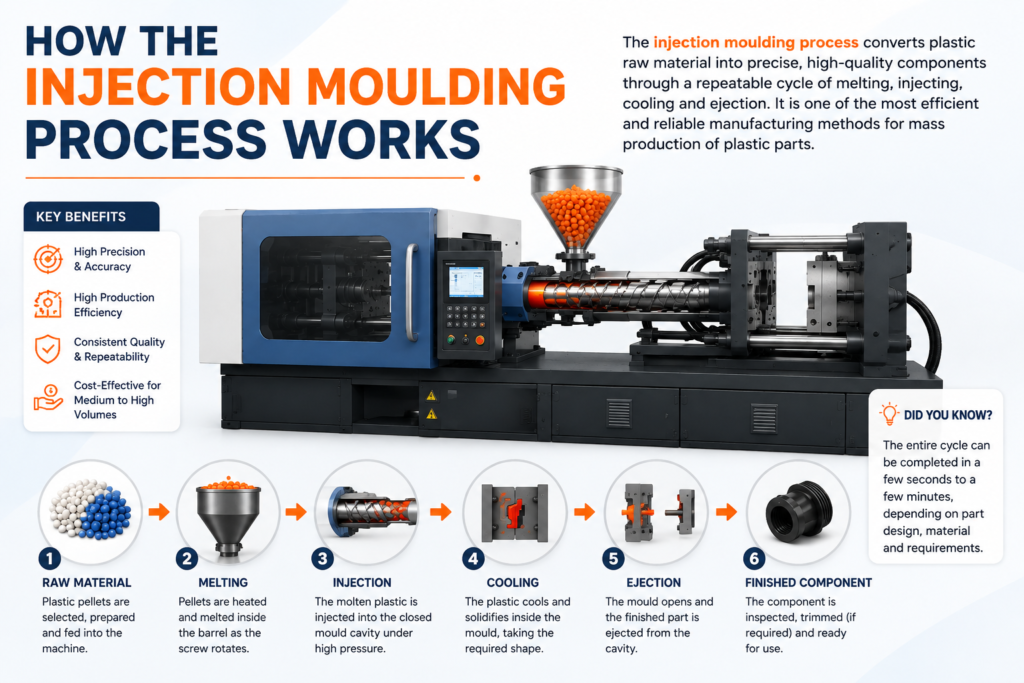
At its core, the injection moulding process converts thermoplastic raw material into a defined component using heat, pressure, a mould and controlled cooling. Plastic resin, commonly supplied as granules or pellets, is introduced into the moulding machine. The material is heated and plasticised until it reaches a condition suitable for injection.
The molten polymer is then pushed under controlled pressure into a closed mould cavity. The cavity represents the geometry of the required component. After filling, pressure may be maintained for a period to compensate for material shrinkage as the polymer begins to cool.
Once sufficient cooling and solidification have taken place, the mould opens and the component is removed or ejected. Depending on the component and tooling configuration, additional operations may include gate trimming, visual examination, dimensional checks, assembly or other finishing activities.
Although the basic cycle sounds straightforward, stable production depends on the relationship between the plastic material, component geometry, mould design and processing conditions. Temperature, injection speed, pressure, holding conditions and cooling time can influence the final result.
This is why an OEM should evaluate more than the presence of an injection moulding machine when selecting an injection moulding supplier. Tooling support, process understanding, inspection practices and the ability to maintain repeat production are equally relevant.
For buyers who want to understand the company’s manufacturing background, SVV Moulders About Us can be used as an appropriate internal-link anchor.
Step 1: Raw Material Selection and Preparation
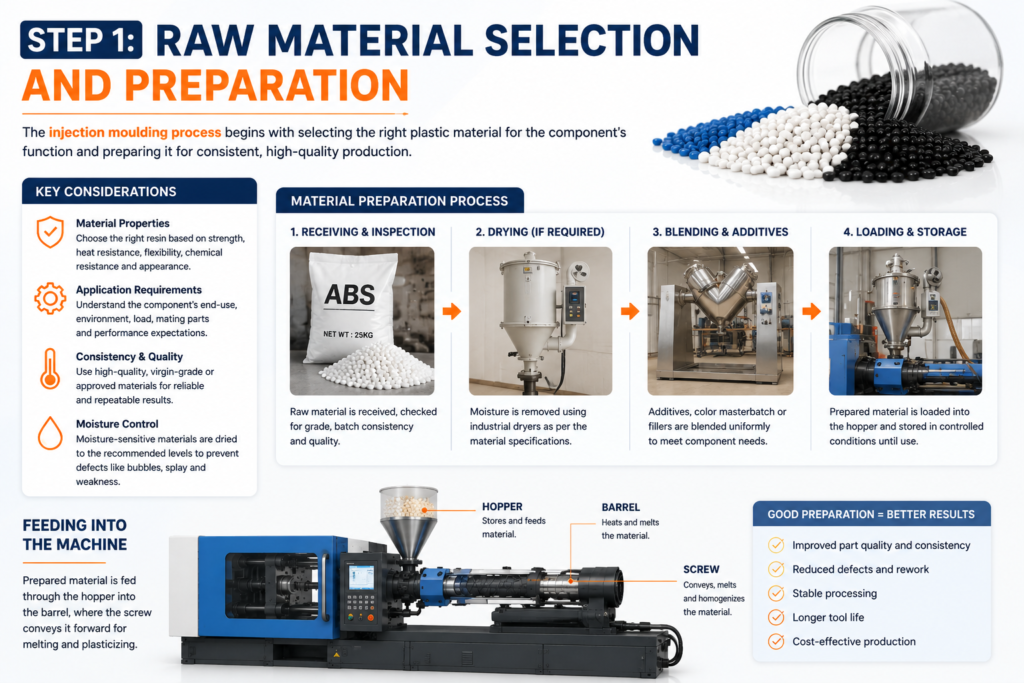
The injection moulding process begins with selecting a polymer that matches the functional requirements of the component. Material selection should therefore be treated as an engineering decision rather than simply a purchasing decision based on price.
Different thermoplastics offer different combinations of rigidity, impact behaviour, chemical resistance, temperature performance, flexibility, surface characteristics and processing behaviour. The correct material depends on where and how the finished component will be used.
For example, an industrial housing may have different mechanical and dimensional requirements from a closure, utility component or internal machine part. Engineers may also need to consider exposure conditions, mating components, expected loads, assembly methods and appearance.
For custom plastic injection moulding, the OEM should communicate the specified resin or required functional properties as early as possible. If a particular material grade is mandatory, this should be clearly identified in the drawing, specification or purchase documentation rather than left open to interpretation.
Material condition before processing also matters. Certain polymers absorb moisture and may require controlled drying before they enter the machine. Excess moisture in moisture-sensitive materials can contribute to processing problems and may affect appearance or performance. Other materials may have different preparation requirements.
Once prepared, the resin is fed through the machine hopper into the barrel. A rotating screw conveys the material forward while heat from the barrel and shear generated during screw rotation contribute to plasticisation.
During this stage, the material changes from solid pellets into a controlled melt ready for injection. The objective is not simply to make the polymer hot, but to prepare a sufficiently uniform melt under suitable processing conditions.
For OEM sourcing teams, choosing the right plastic material for injection moulding should therefore involve component function, design requirements and manufacturing behaviour rather than relying on material cost alone.
Buyers reviewing a manufacturer’s existing component categories can use SVV Moulders Products as a natural internal link within related website content.
Step 2: Melting, Injection and Mould Filling
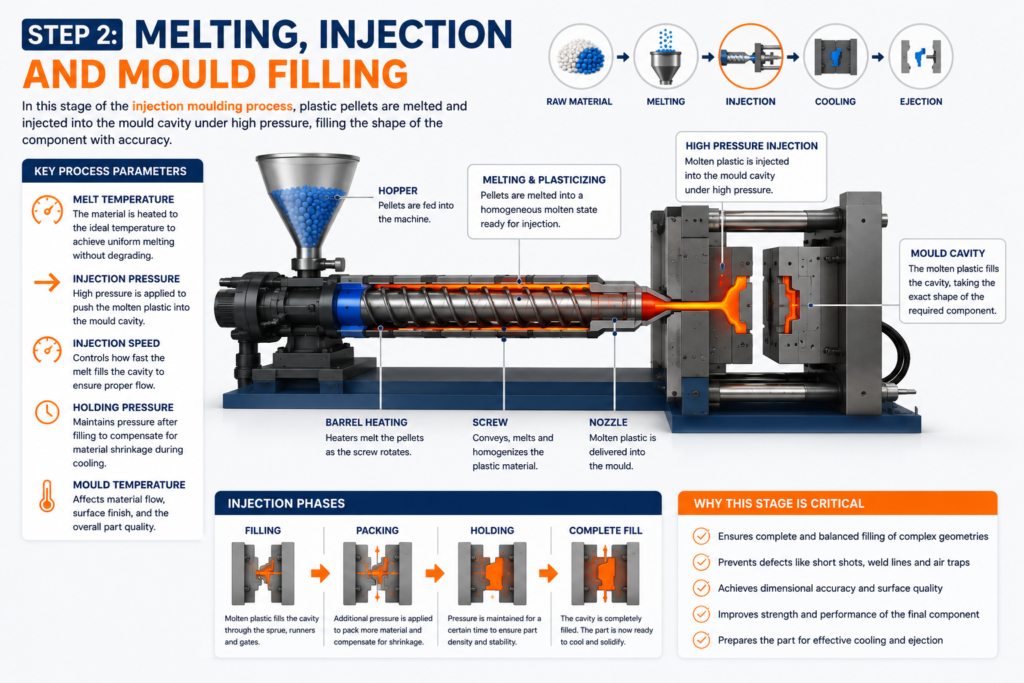
After the material has been prepared and plasticised, the next critical stage of the injection moulding process is transferring the molten polymer into the mould cavity.
The mould is held closed by the machine while the screw moves forward and injects the prepared melt through the machine nozzle and mould feed system. The polymer travels through the sprue, runners and gates where applicable before entering the cavity.
The way the cavity fills is important. Injection speed, melt temperature, mould temperature and pressure need to suit the material and component geometry. Poorly controlled filling can contribute to defects such as incomplete filling, flow-related appearance problems, excessive flash or dimensional inconsistency.
Once the cavity is substantially filled, the process normally transitions into a packing or holding stage. During this phase, pressure is maintained for a controlled period while the material begins to cool and shrink.
This additional material and pressure can help compensate for volumetric shrinkage. However, the correct conditions depend on the component, material, gate design and mould.
Tool design plays a major role in this stage. Gate location, runner design, venting, cavity layout, wall thickness and flow path can influence how the polymer fills the mould. Poor design decisions can make process control more difficult even when machine settings are adjusted carefully.
This is one reason plastic injection mould design considerations should be discussed before tooling is finalised. Engineers should consider manufacturability alongside the intended function of the part.
Where dimensions, appearance or fit are particularly important, precision plastic injection moulding requires close coordination between component design, tooling and processing. A technically sound mould gives the production team a stronger foundation for achieving repeatable components.
OEM buyers evaluating production facilities and quality practices can use Infrastructure & Quality as a relevant internal link to the corresponding SVV Moulders page.
Step 3: Cooling, Solidification and Component Ejection
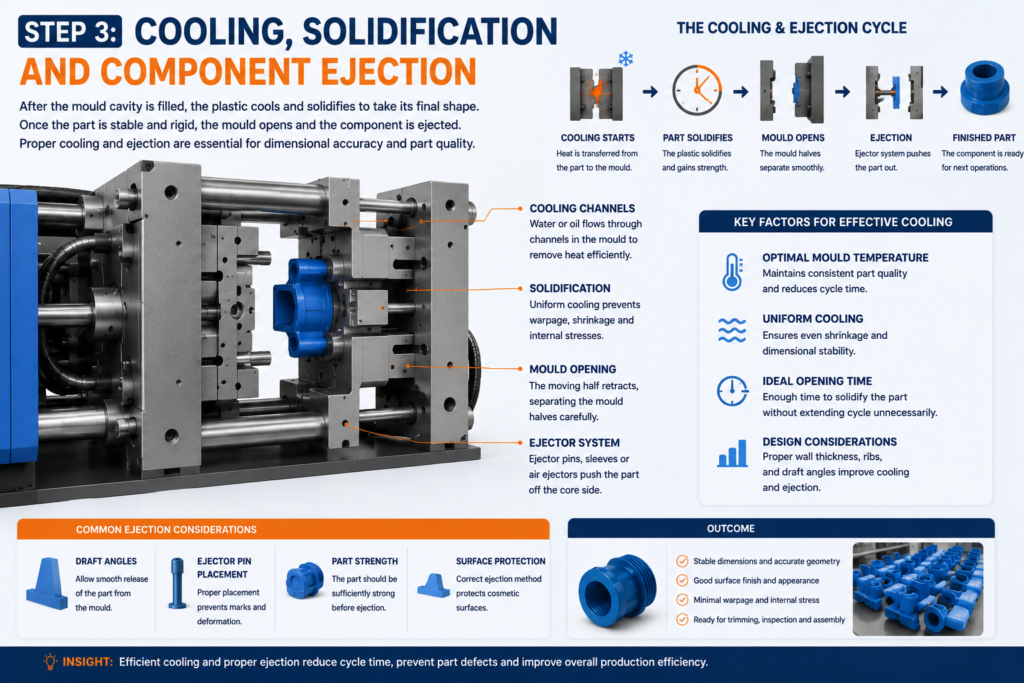
Cooling is sometimes underestimated because the plastic is already inside the required cavity shape. In practice, it is a critical part of the injection moulding process because the polymer must solidify sufficiently before the component can be removed without unacceptable deformation.
As heat transfers from the polymer through the mould, the component gradually becomes rigid enough for ejection. Cooling behaviour is influenced by factors including material type, wall thickness, component geometry, mould temperature and cooling-channel design.
Uneven cooling can contribute to dimensional variation, warpage or residual stresses. Thick and thin areas within the same component may cool at different rates, which is one reason consistent wall design is often considered during design-for-manufacturing discussions.
Cooling time also affects production efficiency. Opening a mould too early may compromise component stability, while unnecessarily long cooling increases cycle time and can reduce manufacturing efficiency. The appropriate balance is established through suitable tooling and process conditions rather than simply targeting the shortest possible cycle.
When the component is sufficiently stable, the mould opens. An ejection system then releases the moulded part from the cavity or core. Ejector pins, sleeves or other mechanisms may be used depending on component and mould design.
Ejection itself must be considered during tooling design. Poor ejector placement or insufficient draft can make component removal difficult and may contribute to marks, deformation or damage.
Draft refers to a slight angle incorporated into appropriate moulded surfaces to help the component release from the tooling. The required draft depends on geometry, material, surface texture and other design considerations.
For plastic injection moulding for OEM applications, cooling and ejection demonstrate why component design and production engineering cannot be treated as completely separate activities. A design must not only perform correctly in service; it must also be practical to mould repeatedly.
Step 4: Finishing, Inspection and Quality Control
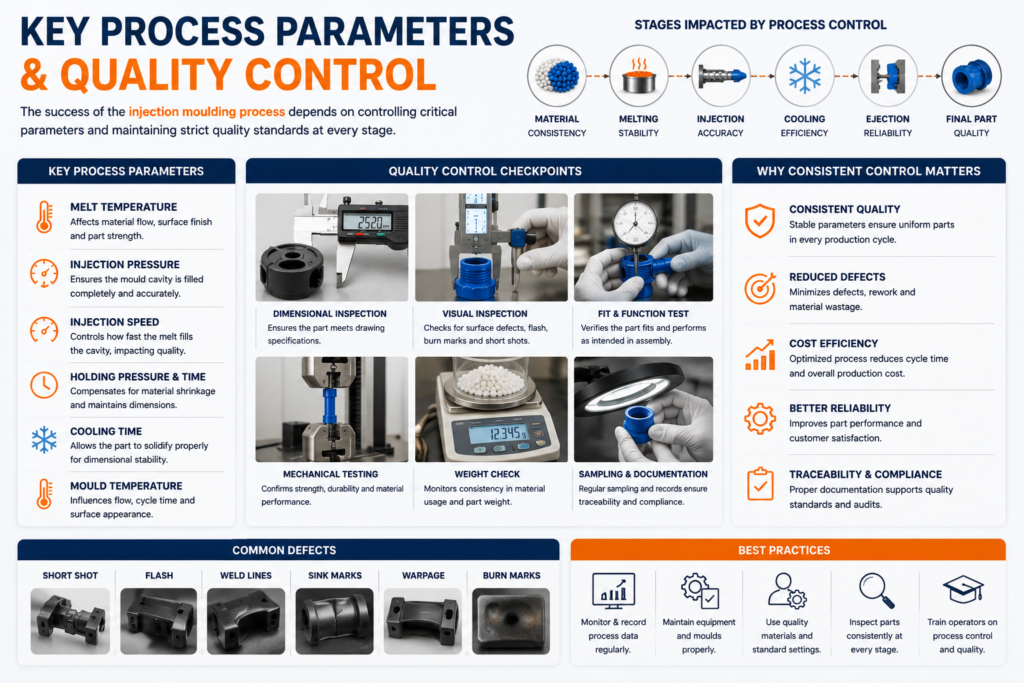
Ejection does not automatically mean the component is ready for delivery. The final stages of the injection moulding process can include finishing, inspection and verification against agreed requirements.
Depending on mould and component design, finishing may involve removing gates, runners or small amounts of excess material. Some components may require additional operations based on their application, although these should be agreed as part of the manufacturing scope.
Visual inspection can help identify surface-related issues such as flash, incomplete filling, visible flow abnormalities, burn marks, contamination or other unacceptable conditions. The relevance of each visual criterion depends on whether the component is cosmetic, functional or both.
Dimensional inspection is particularly important for components that must fit with other parts. Critical dimensions, hole locations, wall sections, interfaces and assembly features may need verification against drawings or agreed tolerances.
OEM buyers should clearly identify critical-to-function dimensions instead of assuming that every dimension carries the same manufacturing significance. This allows quality-control attention to be aligned with the features that influence fit, function and assembly.
Repeatability is another important consideration. An approved sample is valuable, but industrial buyers also need confidence that the manufacturing method can maintain the agreed requirements during subsequent production batches.
Raw-material consistency, mould condition, machine parameters, process discipline and inspection practices all contribute to repeat production.
This is particularly relevant when working with an OEM plastic components manufacturer or industrial plastic components manufacturer for ongoing requirements. The purchasing decision should consider production consistency and communication as well as the initial component sample.
For readers who want to review manufacturing and quality information, SVV Moulders Infrastructure & Quality is an appropriate internal-link opportunity.
From Drawing to Finished Plastic Component: What OEM Buyers Should Consider
For an OEM, the injection moulding process should ideally begin before material enters the machine. A productive supplier discussion starts with a clear definition of what the component must achieve.
Engineering drawings should communicate dimensions, tolerances and relevant technical requirements. Three-dimensional models may provide additional geometry information where available. Buyers should also communicate the intended material or required material properties, application environment, mating parts, appearance expectations and anticipated quantities.
Expected production volume matters because tooling decisions and manufacturing economics can depend on the required quantity and repeat-order potential. A component intended for a limited requirement may involve different commercial considerations from a part expected to run repeatedly over an extended period.
OEM teams should discuss at least the component drawing, material requirement, critical dimensions, expected quantity, quality expectations, delivery requirements and any secondary operations before production is finalised.
It is also useful to clarify how engineering changes will be controlled. If the OEM changes a dimension or component feature after tooling has been developed, the effect on the mould and manufacturing method should be assessed before revised production begins.
For custom plastic parts manufacturing, early technical communication can reduce avoidable misunderstandings between design, procurement and production teams.
Location can also be commercially relevant. Companies sourcing plastic component manufacturing in Hyderabad or Telangana may value easier technical coordination, sample evaluation, production discussions and logistics. However, location should complement—not replace—an assessment of manufacturing capability, tooling support and quality practices.
Understanding how plastic injection moulding works gives procurement teams a stronger basis for comparing suppliers. Rather than evaluating quotations only by unit price, buyers can ask more useful questions about material selection, tooling, manufacturability, inspection and repeat production.
A suitable plastic injection moulding manufacturer for OEM buyers should be evaluated against the actual component requirement. Different projects may prioritise different factors, including geometry, material, dimensional control, quantities, tooling needs and delivery schedules.
Before requesting a quotation, OEM buyers can prepare the drawing or model, material specification, expected quantity, critical dimensions and application details. Providing this information gives the manufacturer a clearer technical basis for reviewing the requirement.
For companies looking to discuss custom plastic components, drawing-based requirements, OEM manufacturing or bulk production, the SVV Moulders Contact page can be used as the final internal-link CTA.
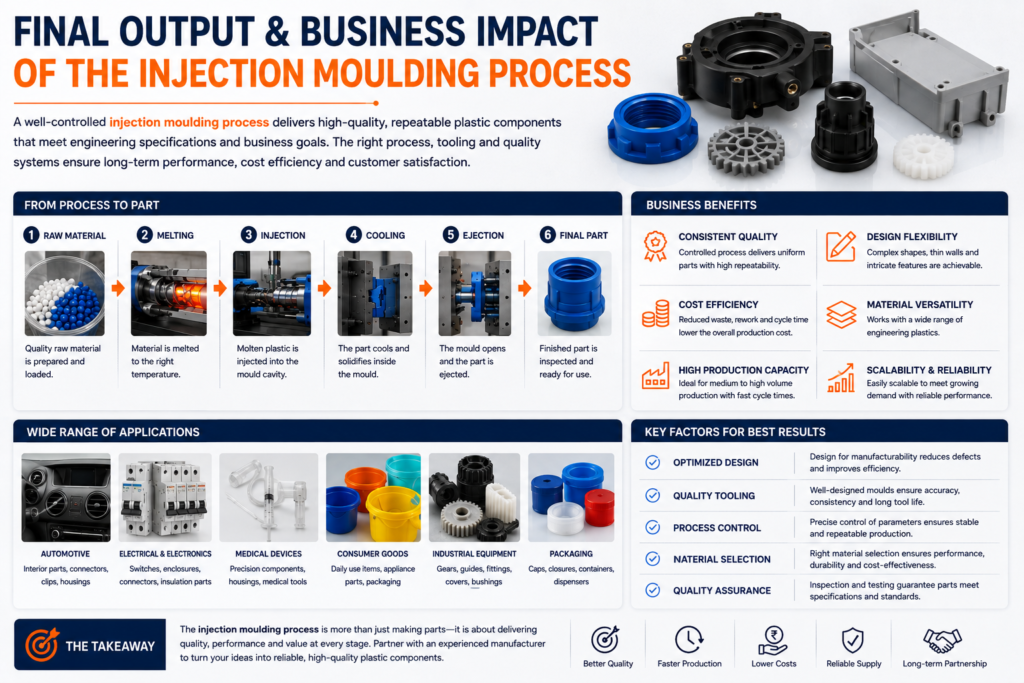
Understanding the complete manufacturing sequence helps buyers evaluate more than the finished appearance of a component. It provides context for material decisions, tooling, processing, cooling, inspection and repeatability—all of which can influence long-term component performance and supply consistency.
Businesses with a defined plastic component requirement can contact SVV Moulders to discuss drawings, specifications, OEM requirements and bulk manufacturing enquiries. Sharing the relevant technical information at the enquiry stage can help establish a more focused discussion around component feasibility and production requirements.